文章介绍了一个基于DolphinScheduler的离线数据治理平台,通过YAML动态编译和自动血缘捕获技术解决了任务依赖黑洞与扩展性瓶颈问题,并利用Neo4j图数据库实现高效血缘存储与分析。同时,自研高性能数据导入工具显著提升了数据传输效率。 2025-8-7 08:26:46 Author: hackernoon.com(查看原文) 阅读量:21 收藏
This article introduces an offline data governance platform built on DolphinScheduler, addressing issues like task dependency black holes and scalability bottlenecks. By implementing YAML-based dynamic compilation and automatic lineage capture, the platform enables efficient task dependency management and data tracking. It leverages the Neo4j graph database for lineage storage, supporting second-level impact analysis and root cause localization. Additionally, with a self-developed high-performance data import tool, data transmission efficiency is significantly improved.
Background and Challenges
Under the pressure of processing petabytes of data daily, the original scheduling system faced two major issues:
- Task dependency black holes: Cross-system task dependencies (Hive/TiDB/StarRocks) were manually maintained, resulting in troubleshooting times exceeding 30 minutes.
- Scalability bottlenecks: A single-point scheduler couldn't handle thousands of concurrent tasks. The lack of a retry mechanism led to data latency rates surpassing 5%.
Technology Stack
|
Component |
Selection Rationale |
Performance Advantages |
|---|---|---|
|
Scheduling Engine |
DolphinScheduler 2.0 |
Distributed scheduling throughput increased 3x |
|
Configuration Center |
Go template engine + YAML |
Lineage update iteration efficiency improved by 70% |
|
Data Synchronization |
Self-developed toolchain + DataX dual engine |
StarRocks import performance reaches 2TB/min |
|
Monitoring & Alerting |
SMS + Voice Call |
Alert response latency < 5s |
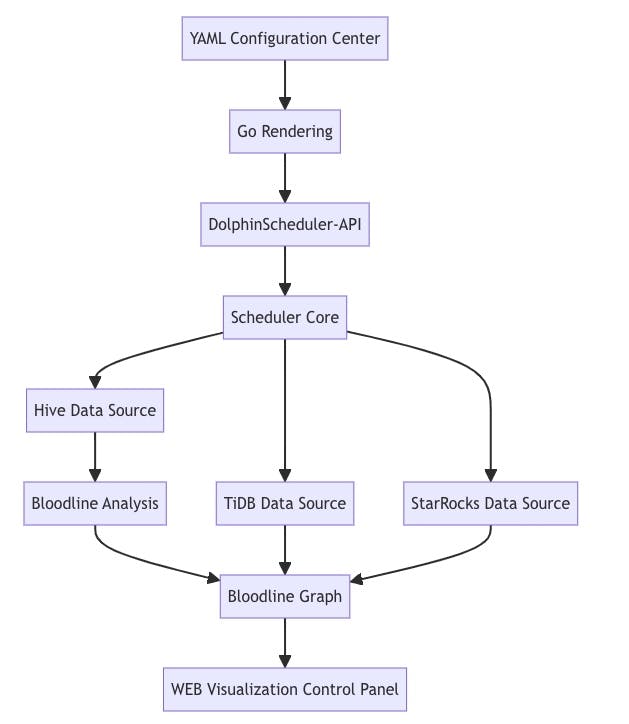
Core Architecture Design

Key Technical Implementations:
- YAML Dynamic Compilation
type TaskDAG struct {
    Nodes []Node `yaml:"nodes"`
    Edges []Edge `yaml:"edges"`
}

func GenerateWorkflow(yamlPath string) (*ds.WorkflowDefine, error) {
    data := os.ReadFile(yamlPath)
    var dag TaskDAG
    yaml.Unmarshal(data, &dag)
    // Convert to DolphinScheduler DAG structure
    return buildDSDAG(dag)
}
- Automatic Lineage Capture
- Intercepts SQL execution plans to parse input/output tables
- For non-SQL tasks, uses hooks to capture file paths
# StarRocks Broker Load Lineage Capture
def capture_brokerload(job_id):
    job = get_job_log(job_id)
    return {
      "input": job.params["hdfs_path"],
      "output": job.db_table
    }
Solutions to Key Challenges
- Zero-Incident Migration Plan
- Dual-run comparison: Run both old and new systems in parallel; use the DataDiff tool to verify result consistency
- Canary release: Split traffic by business unit in stages
- Rollback mechanism: Full rollback capability within 5 minutes
- Self-Developed High-Performance Import Tool
|
Scenario |
Tool |
TPS Comparison |
|---|---|---|
|
Hive → StarRocks |
Hive2SR |
4×+ improvement over DataX |
|
Hive → DB |
Hive2db |
4×+ improvement over DataX |
|
TiDB → Hive |
Db2Hive |
2× improvement over Sqoop |
Key Optimizations:
- Batch submission using Go's coroutine pool
- Dynamic buffer adjustment strategy
func (w *StarrocksWriter) batchCommit() {
    for {
        select {
        case batch := <-w.batchChan:
            w.doBrokerLoad(batch)
            // Dynamically adjust batch size
            w.adjustBatchSize(len(batch))
        }
    }
}
Lineage Management Implementation

Lineage data is stored in the Neo4j graph database, enabling:
- Impact Analysis: Locate the affected scope of a table-level change within seconds
- Root Cause Analysis: Trace the source of an issue within 30 seconds during failures
- Compliance Auditing: Meets GDPR data traceability requirements
Performance Gains
|
Metric |
Before Migration |
After Migration |
Improvement Rate |
|---|---|---|---|
|
Task Failure Rate |
8.2% |
0.1% |
98.8% |
|
Daily Delayed Tasks |
47 |
<3 |
94% |
|
Lineage Maintenance Time |
10h/week |
0.5h/week |
95% |
如有侵权请联系:admin#unsafe.sh