嗯,用户让我帮忙总结一篇文章的内容,控制在一百个字以内,而且不需要用“文章内容总结”之类的开头。好的,我先看看这篇文章讲的是什么。 文章标题是《No Off Season: Three Supply Chain Campaigns Hit npm, PyPI, and Docker Hub in 48 Hours》,看起来是关于供应链攻击的。里面提到在2026年4月21日至23日之间,三个不同的攻击同时袭击了npm、PyPI和Docker Hub。这些攻击的目标不同,但目的都是窃取开发环境和CI/CD管道中的秘密信息,比如API密钥、云凭证、SSH密钥等。 然后详细描述了三个活动:第一个是针对Checkmarx KICS的攻击,第二个是CanisterSprawl蠕虫,第三个是TeamPCP对PyPI的攻击。每个活动都有不同的技术细节,但共同点都是窃取敏感信息。 最后提到GitGuardian的作用,帮助检测暴露的秘密,防止下次攻击时措手不及。 所以总结的时候需要涵盖三个生态系统被攻击,目标都是窃取秘密,以及GitGuardian的作用。控制在100字以内。 可能的结构:三个供应链攻击分别影响npm、PyPI和Docker Hub,在48小时内发生。目标是窃取API密钥、云凭证等敏感信息。GitGuardian提供检测服务以应对此类威胁。 </think> 三起供应链攻击分别针对npm、PyPI和Docker Hub,在48小时内发生。这些攻击旨在窃取API密钥、云凭证等敏感信息。GitGuardian提供持续检测服务以应对此类威胁。 2026-4-23 09:32:50 Author: securityboulevard.com(查看原文) 阅读量:68 收藏
The post No Off Season: Three Supply Chain Campaigns Hit npm, PyPI, and Docker Hub in 48 Hours appeared first on GitGuardian Blog – Take Control of Your Secrets Security.
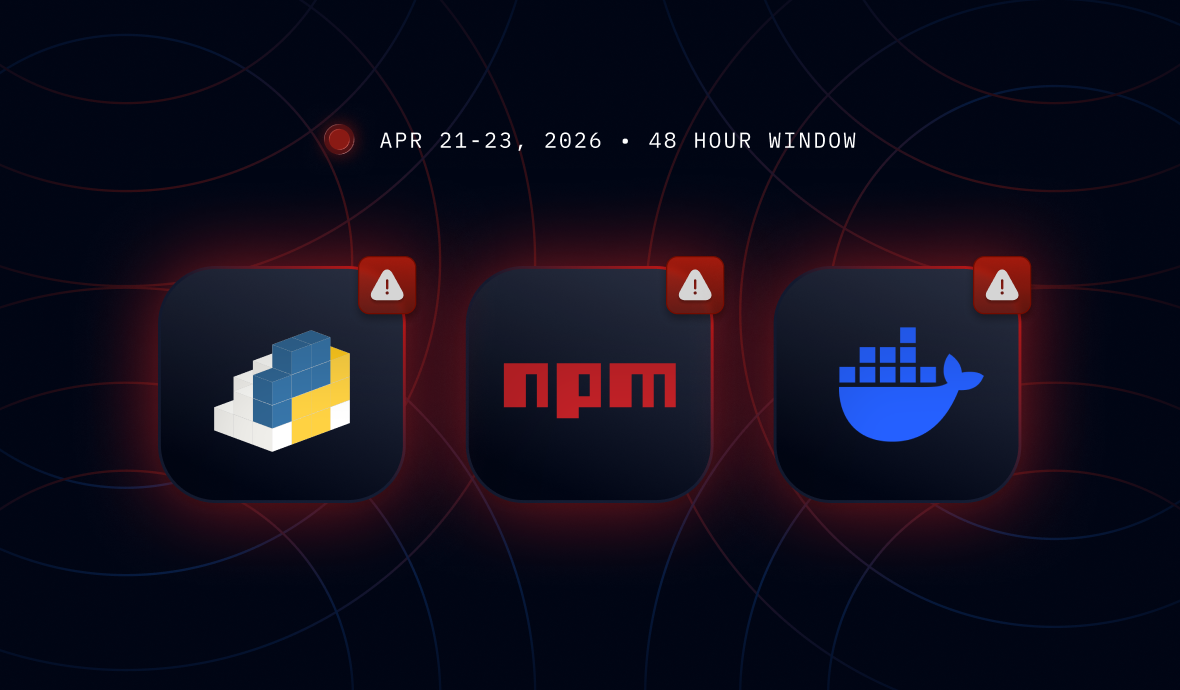
After a few quieter weeks, three supply chain attacks put secrets back in the spotlight.
Between April 21 and 23, 2026, three distinct attacks hit npm, PyPI, and Docker Hub simultaneously. Their targets differ and the threat actor groups might, but their objectives don't: in each case, the malware's primary goal was to steal secrets from developer environments and CI/CD pipelines. API keys, cloud credentials, SSH keys, and registry tokens were all targeted.
Campaign 1 – Checkmarx KICS: Compromised Security Scanner Turns on Its Users
The first attack compromised official Checkmarx KICS Docker images and VS Code extensions. Docker flagged suspicious activity on the checkmarx/kics repository on April 22 and alerted Socket. An obfuscated payload harvested GitHub authentication tokens, AWS credentials, Azure and Google Cloud tokens, npm configuration files, SSH keys, and environment variables, compressing and encrypting everything before exfiltration. The payload swept up any API keys stored in environment variables.
TeamPCP likely orchestrated the attack, based on posts they published on X immediately after disclosure. This would be the group's second Checkmarx attack in two months.
Campaign 2 – CanisterSprawl: A Worm That Turns Developer Machines into Launchpads
On April 21, malicious versions of pgserve, a PostgreSQL server for Node.js, appeared on npm. The compromised versions inject a credential-harvesting script that runs via a postinstall hook on every npm install. It searches for npm publish tokens, and for each package the victim can publish, it bumps the patch version, injects itself, and publishes them to npm. If a PyPI token is also found, the worm jumps ecosystems entirely.
Socket and StepSecurity track this as CanisterSprawl, named after its use of an Internet Computer Protocol (ICP) canister as a resilient, decentralized C2 channel. Socket's follow-up investigation linked compromised Namastex.ai npm packages to the same core methods: install-time execution, credential theft, off-host exfiltration to canister-backed infrastructure, and self-propagation logic.
Campaign 3 – xinference: TeamPCP Returns to PyPI
On April 22, three consecutive releases of xinference on PyPI carried a credential-stealing payload. The malware decodes a second-stage collector, harvests SSH keys, cloud credentials, environment variables, and crypto wallets. StepSecurity attributes this to TeamPCP, the same group behind the litellm and telnyx PyPI compromises in March.
There is one notable technical difference from prior TeamPCP campaigns: the xinference payload sends a plain tar.gz directly to the C2 server. The lack of encryption is why some researchers have suggested a copycat, though the injection pattern and multi-version cadence remain consistent with TeamPCP's established tradecraft.
The Common Thread
Three campaigns, three ecosystems, one objective. None of these attacks aimed to disrupt software delivery or corrupting build outputs. Every payload, from the CanisterSprawl worm to the trojanized KICS scanner to the xinference stealer, was engineered to do one thing: extract credentials from the environments where developers and pipelines operate. The question every affected team should be asking right now isn't just "did this package run in my environment?" It's: what secrets were accessible if it did, and have they been rotated?
Answering that requires knowing where your secrets live: across repositories, CI configurations, environment variables, and developer machines. GitGuardian provides continuous detection of exposed secrets across every surface attackers target, repositories, CI configs, environment variables, and developer machines, so when the next compromised package runs in your pipeline, you're not starting from zero.
The Team PCP Snowball Effect: A Quantitative Analysis
Supply chain attacks cascade through ecosystems in ways traditional metrics hardly capture. GitGuardian evaluates the PCP Team incidents and finds damage spread to thousands of public targets.
 GitGuardian Blog – Take Control of Your Secrets SecurityGaetan Ferry
@npm
*** This is a Security Bloggers Network syndicated blog from GitGuardian Blog - Take Control of Your Secrets Security authored by Guillaume Valadon. Read the original post at: https://blog.gitguardian.com/three-supply-chain-campaigns-hit-npm-pypi-and-docker-hub-in-48-hours/
如有侵权请联系:admin#unsafe.sh