By now, you may have already read that the AI job apocalypse is probably not going to happen. This v 2026-7-2 06:34:27 Author: hackernoon.com(查看原文) 阅读量:15 收藏
By now, you may have already read that the AI job apocalypse is probably not going to happen. This view is gaining mainstream popularity over the past month, with
**So what changed? Perhaps it's simply the recognition that job apocalypse narratives are creating a marketing sentiment that is actually hurting adoption in their own industry. Today,
As someone who works in helping enterprise organizations adopt AI, threats of AI replacement were always clearly overblown. That's because if you look at the actual job and adoption data, AI isn't actually replacing humans — it's changing how humans work.
Are you sure that engineering jobs will reduce?
This follows a predictable pattern of technology adoption across history, now popularly called the
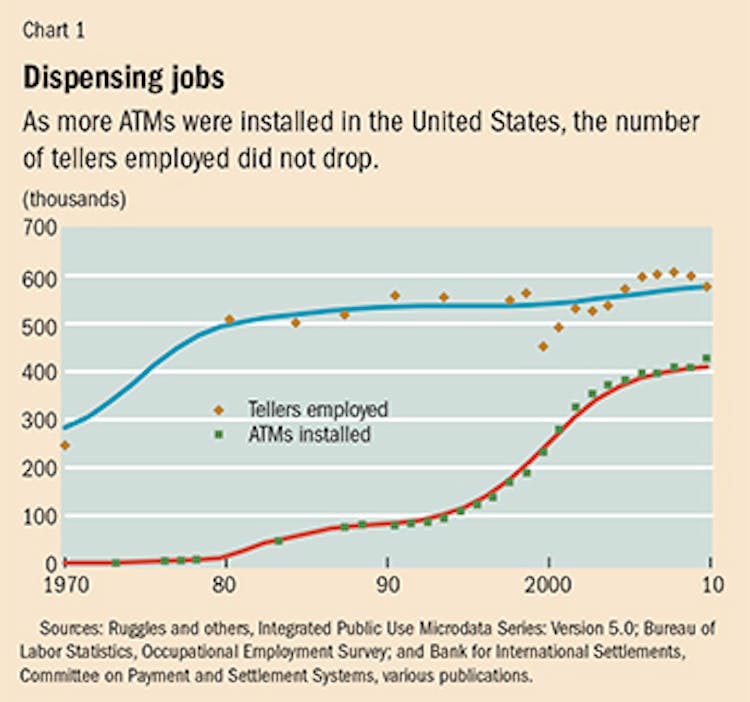
An early example was when the first ATMs were introduced in the US. Everyone predicted the job of the bank teller would reduce by up to 75% in the coming years. But not only did the teller job not reduce,
Why? When technology makes the underlying service easier and less expensive, people apply it more. In the years following the introduction of ATMs in the 1970s, the number of bank branches increased because ATMs made it cheaper to open a branch. Similarly today we see the proliferation of software and AI into every field — people everywhere developing their own apps and websites, even those with no coding background.
And as the technology takes over one task, human roles evolve to take over the tasks that technology cannot do. Tellers evolved into customer service and answering complex questions. In software engineering,
Sure the number of tellers per branch did fall by 30%, similar to how fewer engineers may be required for the same team today, but since the overall demand for bank branches went up, the total number of teller jobs went up as well. With the enhanced demand for software and AI, the outlook for software engineering seems positive as well.
Why AI capability alone doesn't predict how AI will impact work
Software engineering is the most extreme example of how significantly AI can impact jobs, because AI is very capable at the core of the job — coding, a highly technical task with a rigid set of rules and clear expectations of good and bad. But capability across other types of tasks may be quite different.
For those in plumbing, equipment repair, or other skilled trades,
But AI capability is still not the only factor. For instance, consider customer service and mental therapy — AI is highly capable at both. It can talk like a human, often replies with more empathy than the average person, and can take orders and process them effectively without any lunch breaks.
And yet,
And despite AI's prowess at responding with empathy,
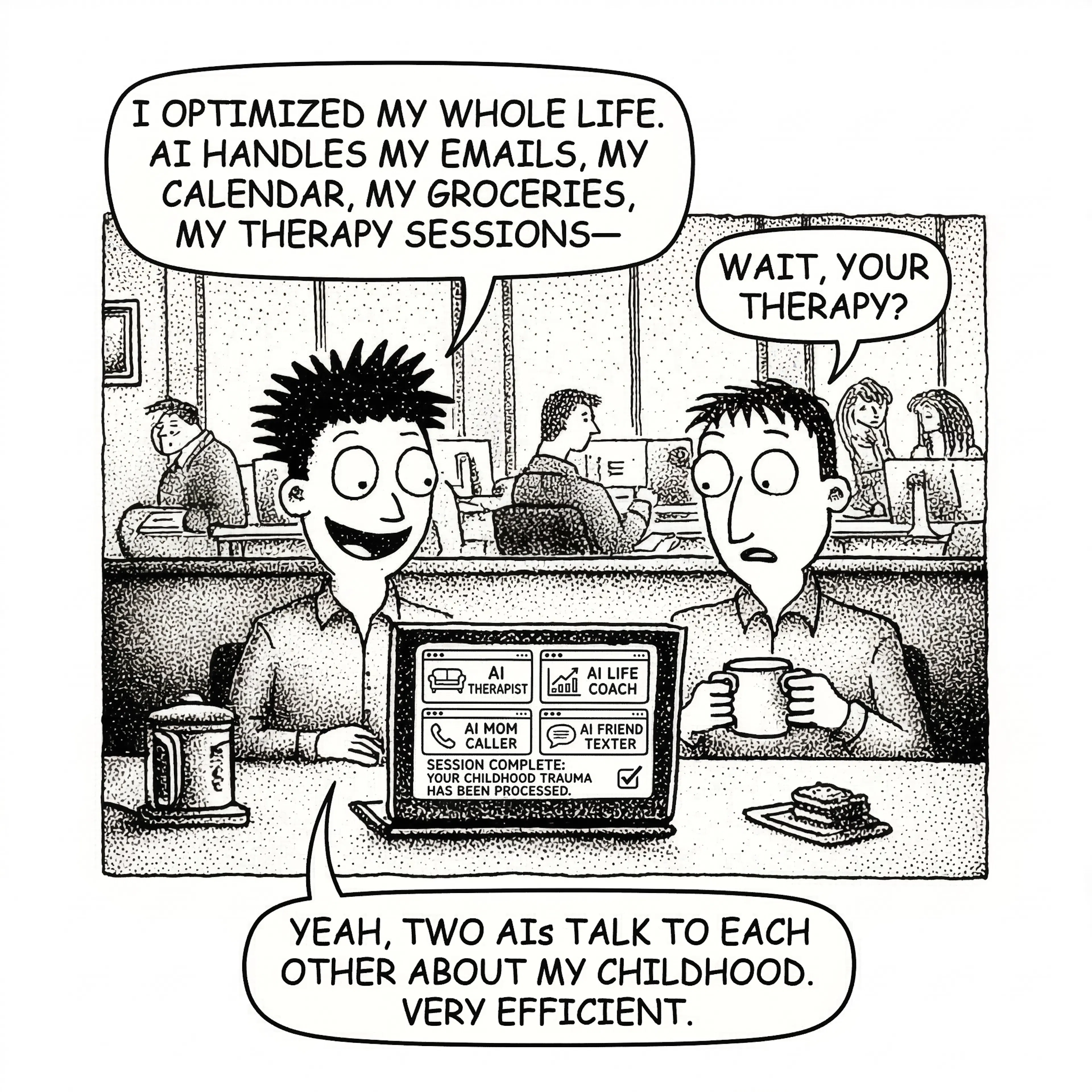
These examples show that how AI changes work is not a factor of capability alone. AI is more than capable already of doing these tasks, but whether people, as the customer, will accept interfacing with AI or not is a separate question entirely. This is the “Market Acceptance” barrier to AI adoption, and it's not the only one.
The PRIME Framework for the biggest barriers to AI adoption
Looking across industries, I created a framework of five adoption barriers that explain why AI usage may be lagging AI capability in many jobs:
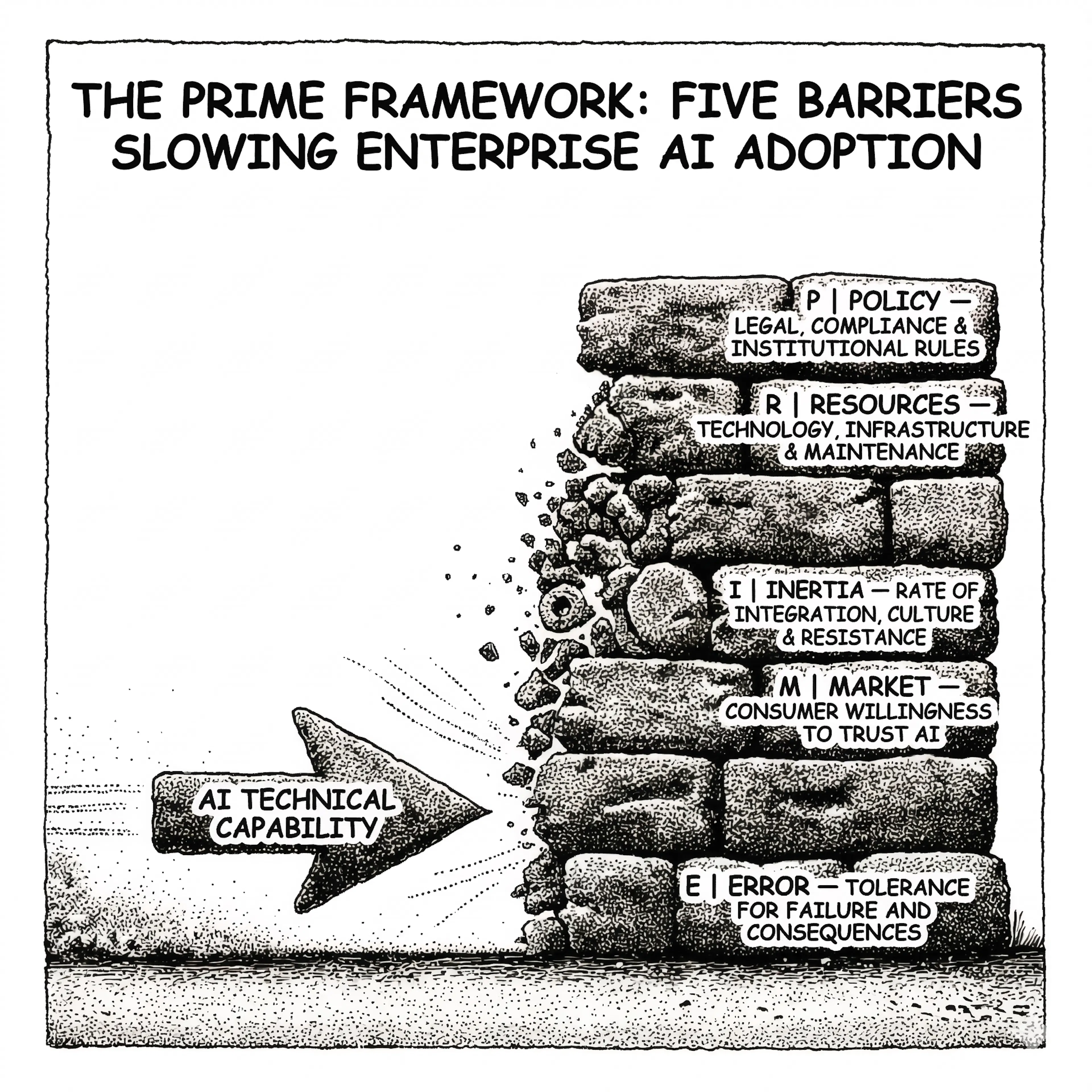
Policy — Are there government regulations preventing adoption, or would using AI threaten longstanding governmental or societal policies? As an example- If AI self-driving trucks were to be introduced tomorrow, would our societal policies and regulations around driving let it?
Resources — How truly expensive is it to deploy AI in a role? Companies are quickly discovering AI is not that cheap. __Uber burned through its entire 2026 Claude budget in just four months, __with
Inertia — Incorporating AI at work requires culture change. How quickly will a company integrate new tech like AI into its processes, systems, and workflows?
Market Acceptance — As discussed in the examples above, will people and consumers accept what AI is producing?
Error Tolerance — AI still hallucinates, and may always continue to. How tolerant is that job or task of errors? Remember that people are much more accommodating of errors by humans and demand of technology, especially if the work has serious consequences, like in healthcare.
In conclusion, AI is not here to replace anyone. Its impact on work is highly uneven, depending on its capability and the number of barriers to AI adoption in your specific task or job. What's clear is that it's looking like the people who will thrive are those who own workflows, use judgment to understand where and where not to trust AI, and use it to do better and more meaningful work.
Ani Bajaj is a Product Manager at Microsoft and the author of
如有侵权请联系:admin#unsafe.sh