
The FBI, in collaboration with Google and other actors, has taken down NetNut’s proxy network while 2026-7-7 12:9:48 Author: hackernoon.com(查看原文) 阅读量:25 收藏
The FBI, in collaboration with Google and other actors, has taken down NetNut’s proxy network while targeting a 2-million-device botnet. What was once considered one of the largest proxy networks has now been forcibly disrupted.
Now, this isn’t just about finding a NetNut alternative. The incident highlights that ethical and legal compliance must be a structural requirement for any serious proxy provider.
Follow along as we unpack the what, when, and why behind the NetNut case, and explore what this shift signals for the future direction of the proxy industry! 🔮
The FBI Just Took Down NetNut: The News That Shook the Proxy Industry
On July 3, 2026, the FBI teamed up with Google, Lumen, and Shadowserver to significantly disrupt NetNut, one of the world’s largest residential proxy networks.
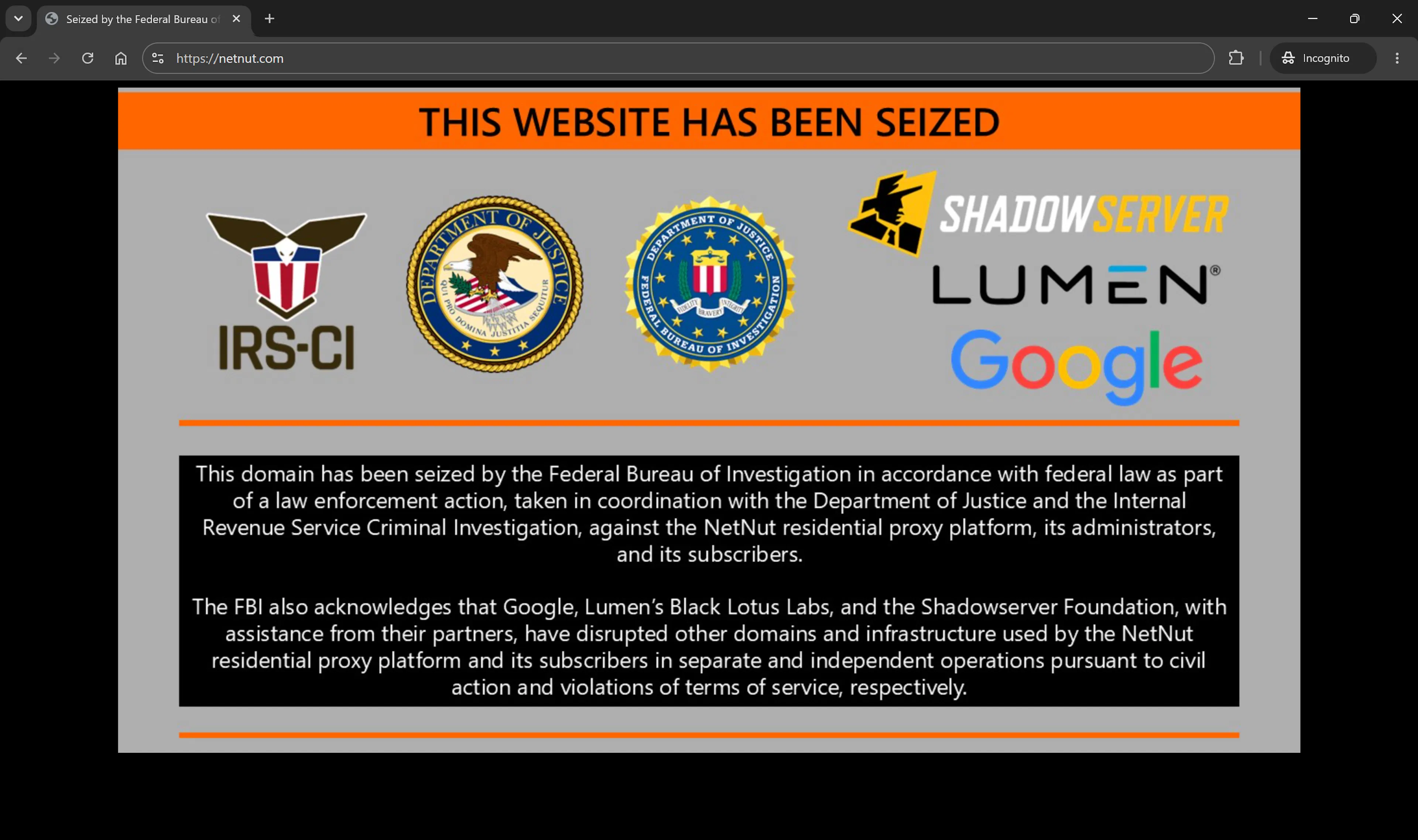 What you see when visiting netnut.com
Authorities seized domains linked to the service and targeted the infrastructure behind what researchers call the Popa botnet. That’s a network believed to have quietly enrolled more than two million consumer devices, mostly Android TV boxes and streaming devices, as residential proxy exit nodes for malicious purposes.
Unsurprisingly, the news spread like wildfire across the scraping and proxy community. 🔥 NetNut wasn’t just another proxy provider. It was widely considered a major player and powered a large white-label ecosystem. In other words, many residential proxy brands relied on the same underlying infrastructure… 😮
At the center of the investigation is Alarum Technologies, NetNut’s parent company, which is being investigated over alleged links between NetNut and the Popa SDK. Alarum denies wrongdoing and says it’s fully cooperating with law enforcement.
So, What Actually Happened?
As is often the case, this story is much bigger than an overnight FBI takedown…
The disruption of NetNut is part of a broader, ongoing operation led by the FBI, Google, and other cybersecurity organizations to dismantle Popa and other residential proxy infrastructures that have allegedly been abused by cybercriminals.
Below’s the timeline based on the publicly available facts:
- 🕵️ The investigation started long before the takedown:
According to Bloomberg , the FBI had been investigating possible links between NetNut, its parent company Alarum, and the Popa SDK for more than a year. - 🚨 January 2026 marked the first major operation:
Google and its partners disrupted the IPIDEA proxy network , reducing its infrastructure by millions of devices and signaling the start of a broader campaign. - 🔬 Researchers uncovered links to Popa: Throughout 2026, multiple security firms published research connecting the Popa SDK to millions of Android devices and identifying technical overlaps with NetNut’s infrastructure.
- 📊 Google observed widespread abuse: In a single week during June 2026,
Google’s Threat Intelligence Group identified 316 threat clusters using suspected NetNut exit nodes for cyberattacks and espionage. - ⚡ July 2026 brought the coordinated disruption: The FBI, Google, Lumen, Shadowserver, and other partners seized domains, disrupted backend infrastructure, disabled malicious Google accounts, and updated Google Play Protect to reduce the network’s scale.
- 🔎 The investigation is still ongoing: Alarum has stated it’s cooperating with law enforcement and temporarily suspended parts of its network. At the same time, authorities continue investigating the alleged connection between NetNut and Popa.
The Domain Controversy
NetNut’s primary commercial domain is netnut.io, yet only netnut.com displays the FBI seizure banner at the time of writing. 🤔 This led some to speculate that law enforcement had seized the wrong domain.
However, security researchers quickly clarified that both domains are associated with the same operation, and that differences in registrars, jurisdictions, or legal processes likely explain why one domain remained accessible longer than the other.
The Compliance Wake-Up Call
NetNut’s disruption isn’t just about one provider… It signals growing scrutiny across the entire residential proxy ecosystem.
➡️ The result is clear: compliance, transparency, and consent aren’t discretionary. They’re now central to trust, stability, and long-term survival in the ecosystem!
Compliance Is No Longer Optional in the Proxy Industry \ After what just happened, it’s clear that legal and ethical compliance are now a core infrastructure requirement for any responsible proxy provider. 🚨
 With great power comes great responsibility
But what does “responsible” actually mean in practice? 🤔
At its core, it means embedding governance directly into the proxy infrastructure itself, not treating it as an afterthought. Providers are expected to operate with transparency, accountability, and clear control over how proxy networks are sourced, accessed, and used.
A compliant proxy provider should be able to demonstrate:
- Transparent sourcing of traffic, including how devices are enrolled and SDKs are distributed.
- Clear user consent mechanisms, where participation is informed and verifiable when applicable.
- KYC and customer verification processes, ensuring clients are properly identified and vetted where required.
- Strict acceptable use policies, backed by enforceable technical controls.
- Abuse prevention systems, designed to detect and stop malicious or unintended usage.
- Full documentation and auditability, ensuring data flows can be traced and verified.
- Cooperation with legal frameworks, including an appropriate response to law enforcement requests.
- Domain health and rate-limit protections, to avoid disrupting target websites.
- Data lifecycle governance, including retention rules and responsible handling.
And What About Ethical and Compliant Data Collection?
In many cases, proxy providers also overlap with scraping services (just like in the case of NetNut). Proxies are deeply tied to automated data scraping and large-scale web interaction. Thus, compliance can’t stop at the proxy layer alone. It must extend all the way into the data layer!
In this respect, modern industry frameworks like the
Data collection should be limited to publicly accessible data, governed by transparent policies, and backed by clear documentation and accountability mechanisms.
In practical terms, this translates into a set of expectations that are quickly becoming industry standard:
- Legal compliance first: All data collection must comply with applicable laws and regulatory requirements, with no exceptions.
- Public data only: Collection is limited to openly accessible internet pages, explicitly excluding login-protected or restricted content.
- Domain health monitoring: Continuous monitoring of target site performance to avoid degradation, overload, or unintended disruption during web interaction or data collection.
- Respect for robots.txt:
Check and honor robots.txt directives , while documenting when and how they’re applied. - Responsible rate limiting: Adopt human-like pacing, adaptive throttling, concurrency control, and scheduling techniques such as delays or low-traffic windows.
- Governance, transparency, and accountability: Unified standard covering documentation, query logs, abuse reporting channels, and internal compliance oversight to ensure full traceability and responsible use.
The core idea is to preserve access to public web data while ensuring it’s collected responsibly, transparently, and without harming ecosystems or user trust. 🌍
How to Evaluate a Proxy Provider After NetNut’s Incident
The NetNut crackdown has made it clear that proxy infrastructure isn’t something you evaluate only based on pool size, speed, and price anymore!
Today, choosing a NetNut alternative (or a proxy provider in general) is also about understanding how responsibly that network is built, operated, and governed. After all, if those foundations are weak, everything built on top of them becomes fragile.
Questions Every Customer Should Ask
Before committing to any proxy provider, go through the following checklist of questions:
☐Is proxy sourcing transparent, documented, and based on explicit enrollment models?
☐Do end users understand their devices are part of a network when applicable?
☐Are customers verified, or can anyone freely access large-scale proxy infrastructure without oversight?
☐Are acceptable use policies enforced technically? Or are they just legal text with no real enforcement behind them?
☐Is there active detection of malicious usage, scraping abuse, or compromised traffic patterns?
☐Are logs, usage traces, and network flows available for verification and accountability?
☐Does the provider actively prevent overload or disruption of third-party websites?
☐What happens if parts of the network are degraded or taken offline?
The Cost of Choosing the Wrong Provider
When compliance collapses, the effects hit fast, ranging from service disruptions to legal uncertainty around improperly sourced traffic. ⚠️
 You don’t want to end up in this situation because of the wrong proxy provider choice…
The problem is that when a proxy provider fails, the impact spreads across its entire customer base. As a result, businesses connected to that provider can face:
- Reputation damage.
- Sudden operational downtime.
- Instability caused by infrastructure failures.
Ultimately, the consequences impact revenue, service reliability, and public trust.
Looking for a Secure NetNut Alternative? Bright Data Is the Solution!
One of the
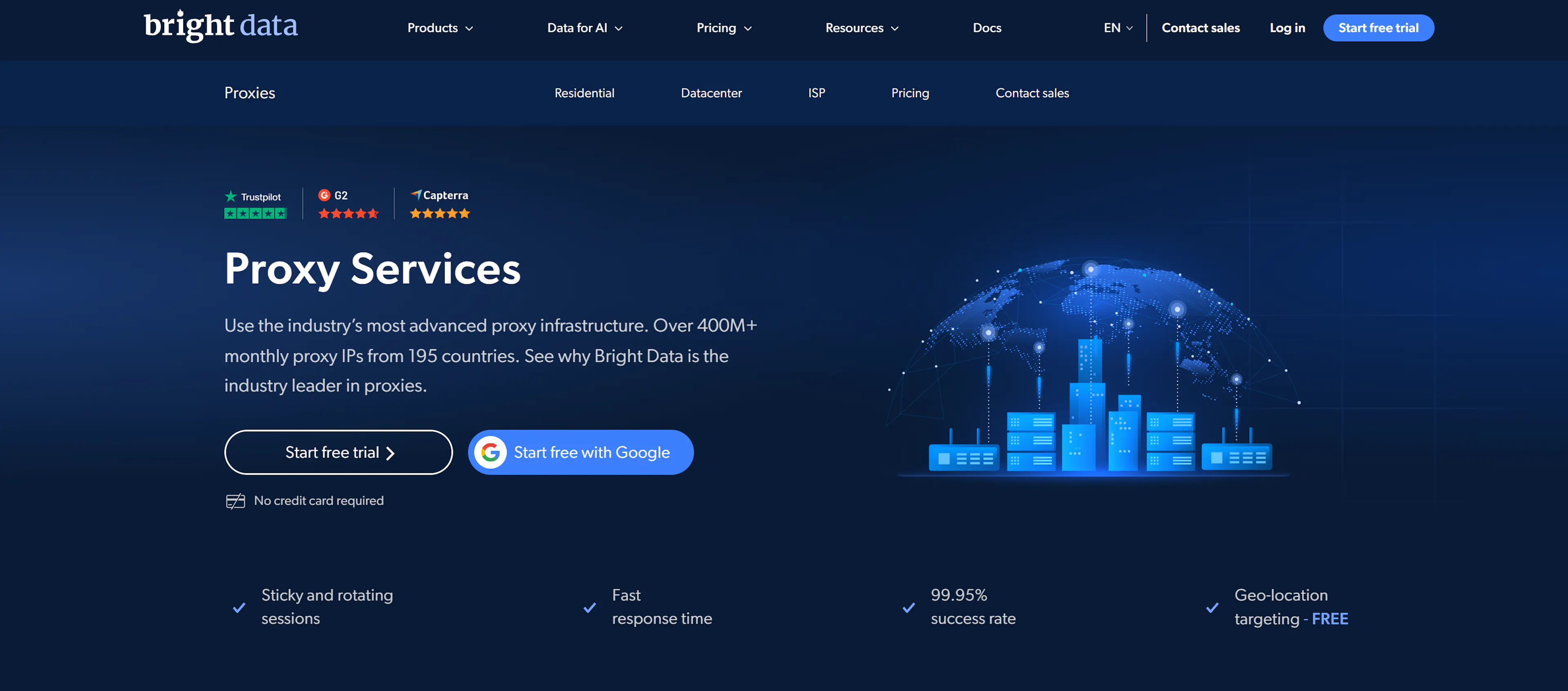 Bright Data's proxy offering
Bright Data operates one of the largest proxy networks in the industry, offering 400M+ ethically sourced IPs across 195 countries. It delivers 99.99% uptime and achieves a 99.95% success rate, along with low-latency routing and fine-grained geo-targeting options. Residential proxy pricing
But as discussed earlier, scale, pricing, and features alone aren’t the only differentiators. What matters increasingly is compliance and governance.
In that regard, Bright Data is a founding member of the Alliance for Responsible Data Collection (ARDC) and is aligned with industry-wide responsible data collection frameworks built around controlled access and responsible sourcing of public web data.
In a
This includes strong signals around IP sourcing transparency, consent-driven SDK ecosystems, abuse prevention systems, and
 Bright Data's Trust Center
For teams evaluating risk, Bright Data also provides a dedicated
Final Thoughts
The NetNut case is more than just another industry headline. 📰 It shows a clear shift in the proxy market where compliance is becoming a defining factor.
Today, performance, features, IP pool size, and pricing still matter, but they’re no longer enough on their own. Long-term reliability now depends on responsible infrastructure, transparent operations, and strong governance.
In this context, Bright Data stands out as the strongest NetNut alternative thanks to its full-stack, compliance-oriented proxy and web data infrastructure built for enterprise-grade use cases.
如有侵权请联系:admin#unsafe.sh